
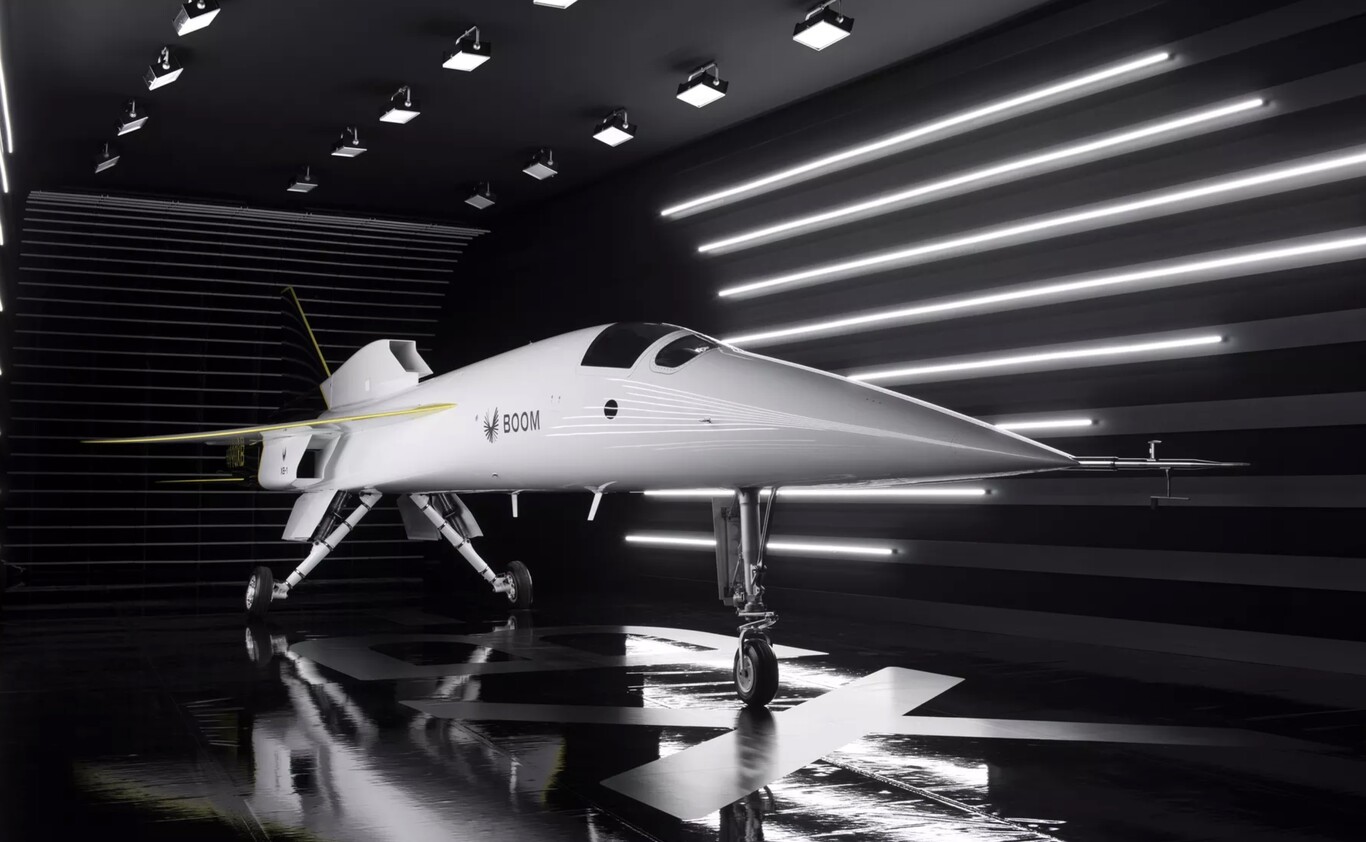
Despite the paralysis caused by the Covid-19 pandemic, the aeronautical industry has not left aside technological development, and an example of this is the new supersonic aircraft project of the “Boom Supersonic” company, which for more than five years has been trying to return the supersonic aircraft to commercial aviation.
Presentation of the prototype
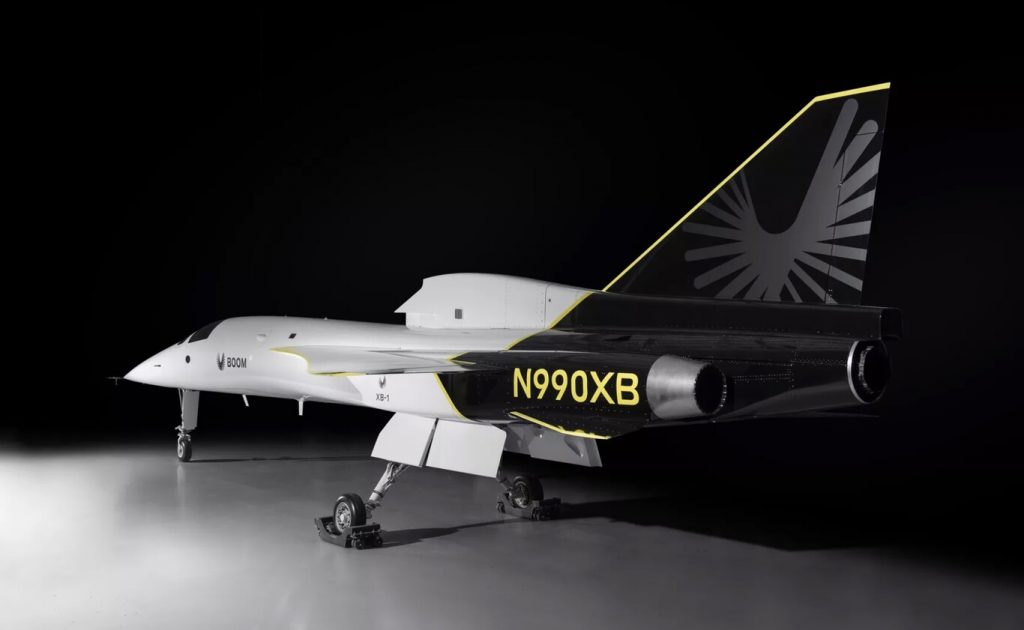
In October of this year, the company Boom Supersonic presented a prototype of a supersonic commercial airplane. The company wants to bring supersonic aircraft back to the air transport market, which has not been served by such an aircraft since the “Concorde” was taken out of service in 2003.
The prototype presented is called the “XB-1”, although the prototype does not have the capacity to perform the functions of a passenger aircraft, it will be crucial to test the technologies used by Boom Supersonic in the development of what will be the company’s future supersonic aircraft. It is worth mentioning that unlike the “Concorde”, Boom Supersonic’s project is being developed completely independently.
It has not been easy for the company to develop the prototype, as several setbacks have occurred. Boom Supersonic’s original plans were to have the XB-1 ready by 2016 and to begin test flights in 2017, in order to have a functional airliner ready by 2020. Therefore, the delay in the presentation of the model is approximately 4 years.
Now that the XB-1 has been introduced, the next step will be to perform a series of ground tests to measure the performance of the prototype before putting it to a real test (test flight) in Mojave, California in 2021. It is expected that with the current development of the project the XB-1 will have no further setbacks.
Getting to know the prototype
The Boom Supersonic XB-1 is a prototype of what will be the future commercial aircraft, so it does not reach the dimensions of what will be the final aircraft of the project. At the moment, the prototype is only 21 meters long and only has the space of one seat for the pilot. The drive is provided by 3 J85-15 engines produced by General Electric in which the most efficient supersonic engine air intake system ever tested in civil aviation stands out.
The future of the Supersonic Boom project
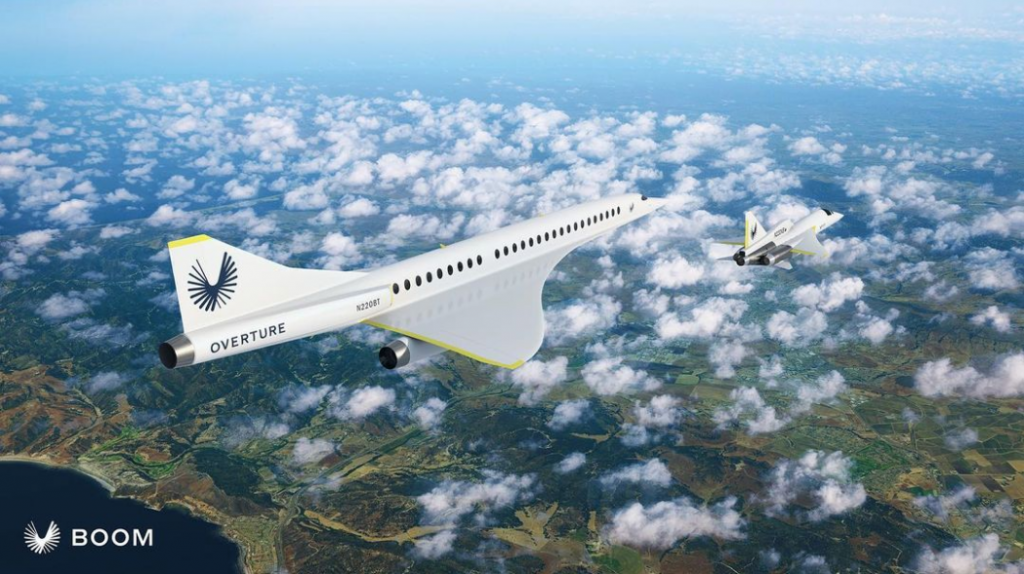
The XB-1 prototype aims to complete its tests in order to provide all the necessary data for the development of Boom Supersonic’s first commercial aircraft, the “Overture”, which is expected to be completed between 2025 and 2029. Blake Scholl, founder, and CEO of Boom Supersonic said: “The XB-1 is an important milestone in the development of our commercial aircraft, Overture, which will make supersonic flight sustainable and promote human connection”. Overture will be approximately 60 meters long, will be able to transport between 65 and 88 passengers, and its speed will be double that of an average aircraft today.
What do you think about this issue? Do you think that commercial aviation will opt for the use of supersonic airplanes in the next few years?
If you have any doubt or question you can contact us or write your query in the comments section below.
Image of Boom Supersonic via Instagram under Creative Commons license.
