
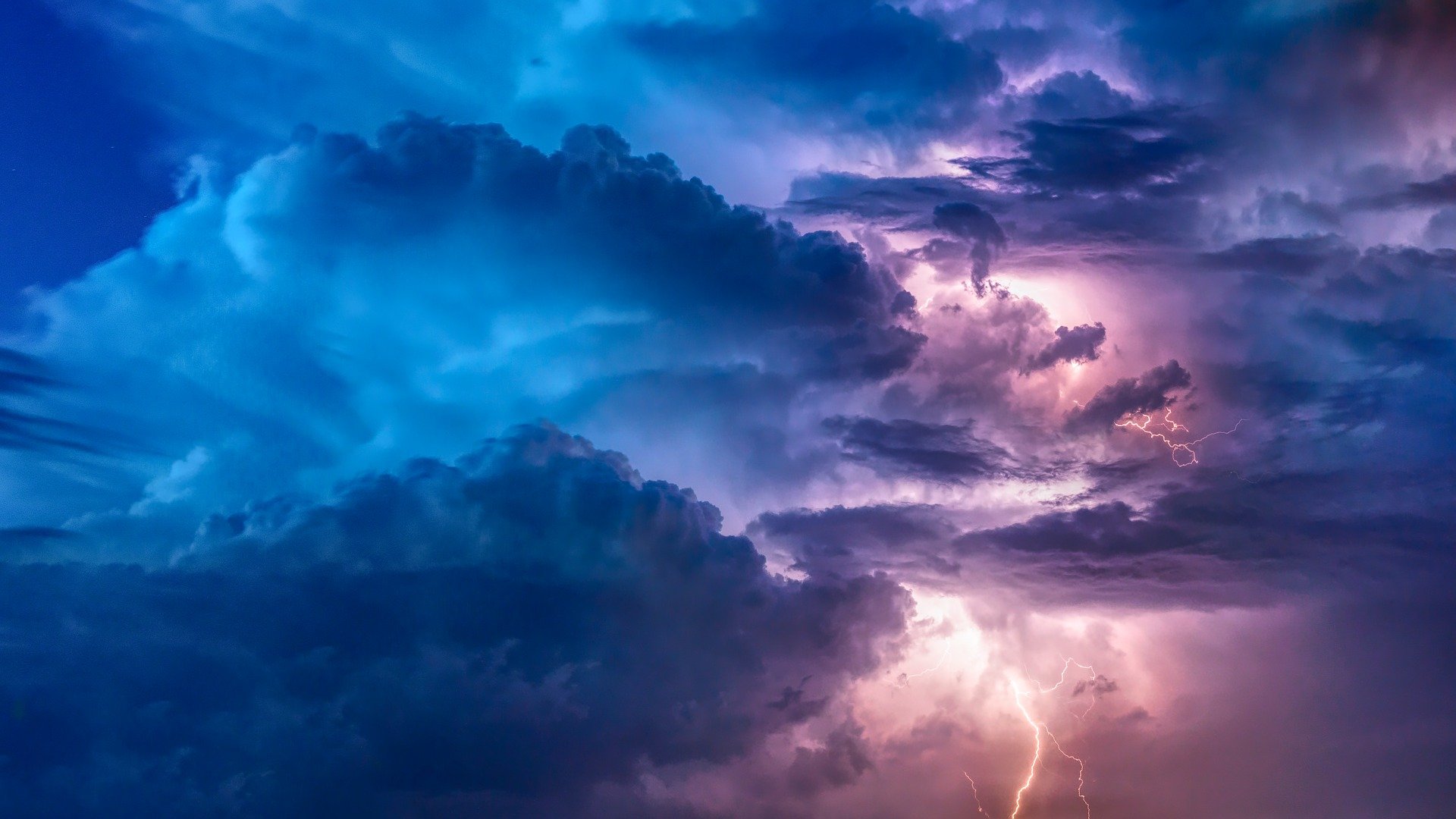
Storms and meteorological phenomena are the most feared for air navigation. The most dangerous cloud formations bear the name of “cumulonimbus” and their vertical formation depends on solar heating together with low temperatures at altitude and a high presence of water vapor. Inside a “cumulonimbus” we find several updrafts and downdrafts that cause extreme turbulence, in addition to hail and electrical storms. The meteorological radar is a great tool for pilots to see in real-time the weather where the plane will pass and thus prevent.
Contents
Weather radar operation
The meteorological radar emits pulses of energy in the form of electromagnetic waves; during their propagation, they collide with drops of water, hail, particles, and part of the energy is reflected on the radar. The radar alternates moments of reception of information and moments where it sends the electromagnetic pulses, in this way the weather is built as is in the direction in which the plane is going.
The information that the radar receives transforms them into color for its better understanding. The green color means there is low precipitation; the yellow color represents medium precipitation and the red color high precipitation. The radar represents the storms in magenta; these areas should always be avoided during flights. It is advisable in these cases to surround the area or go over them.
Ways to use the weather radar
The best way to use radar is to use the weather forecasts together, in this case, the radar becomes a tool that allows us to analyze and prevent early what is detailed in the forecast. In some cases, also considering both tools, it is possible to decide to delay the flight or even not leave if the weather situation is unfavorable. It is vital to have this information for the captain of the plane and the crew because it helps in decision-making.
Antenna tilt
With this function, the pilot can select the sweeping shape he wants the antenna to make; taking a longer route, and getting more information about the weather situation that the plane is going to go through. This function is also an important part because the plane varies altitude during a trip several times, and, for this reason, it is important to have the facility to adapt the inclination of the antenna, although there are aircraft that have this function automatically.
Display range
The crew must select suitable viewing ranges. Decisions are made just 40 miles from the zones, so it is important to take all the facts into account. Another important point is that you must have high and low ranges, in this way you make sure you do not fall into a dead end. A course change in a low range that may be safe, may later reveal a difficulty that was not considered in a high range and be affected by the weather.
Turbulence mode
Some radars are equipped with a turbulence display mode. It is based on the Doppler Effect and is sensitive to precipitation movements. To make safe decisions, it must be activated; the screen will show different colors determining the different intensities found in the storm, showing in red what corresponds to the areas with the highest turbulence.
The meteorological radar is a fundamental piece for the crews of the different flights. The information you provide to pilots is critical to making decisions that allow flights to be safe in the air. The ability of the pilot to be able to interpret the information that he provides is also essential, a task that is not easy because it must be taken quickly.
What do you think about this topic? Did you already know how a weather radar works?
If you have any doubts or questions, you can contact us or write your query in the comments section below.
Image by RENE RAUSCHENBERGER on Pixabay under Creative Commons license.
